20 mg/day
Saffron dose matching the Italian Falsini AMD retinal-flicker trial protocol — Visiorax delivers the same daily total
Catalogue editorial review
Saffron + Amla + Curcumin + Yashtimadhu + Brahmi + Punarnava — Chakshushya Rasayana heritage
Drishti — the Sanskrit term for visual acuity — and Chakshushya, the broader category of substances classically grouped as 'eye-supportive', have anchored Ayurvedic ophthalmology for more than two thousand years through the Sushruta Samhita's detailed treatise on Netra Roga (eye conditions). India's contemporary eye-health profile has shifted dramatically: large national surveys describe Indian working adults spending 8–11 hours daily on digital screens, with corresponding rises in dry-eye symptoms, accommodative fatigue, and screen-related visual discomfort. Modern Indian-led modern wellness research over the past two decades has validated the ocular relevance of several classical Chakshushya herbs at modern standardised doses. Visiorax sits firmly in that lane — an Ayurvedic-heritage capsule for Indian adults who want the classical Drishti formula rather than a Western AREDS2-style stack, taken alongside (never instead of) regular ophthalmic examination.
Saffron dose matching the Italian Falsini AMD retinal-flicker trial protocol — Visiorax delivers the same daily total
Catalogue editorial review
Emblica tannoids delayed lens-protein glycation under metabolic stress — lens-level basis of Amla's classical Chakshushya role
Catalogue editorial review
Curcumin reduced retinal VEGF expression in reviewed Indian ophthalmology research — Haridra's modern mechanism citation
Catalogue editorial review
Daily screen exposure reported by Indian working adults 25–55 in metro cities — Visiorax's target demographic
Indian screen-use surveillance
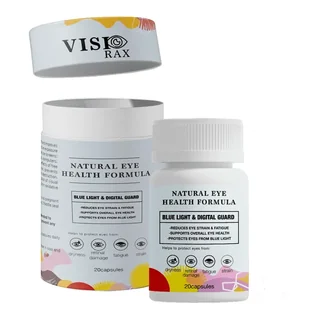
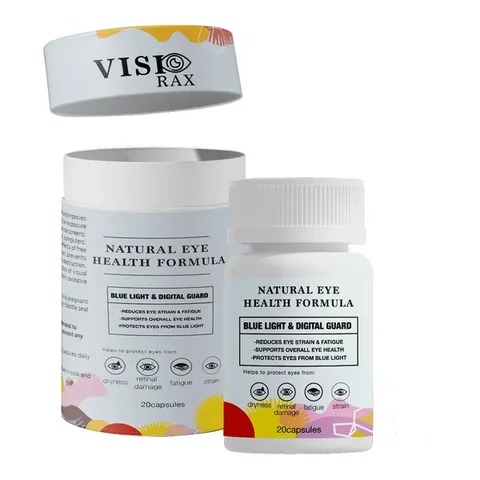
Visiorax is a pure Ayurvedic eye-nutrition formula built on the classical Chakshushya Rasayana tradition of Indian medicine — the 'eye-supporting rejuvenation' lineage described in the Sushruta Samhita and Charaka Samhita as nutritional support for Drishti (visual acuity) and Akshi (the ocular tissues). The formulation brings six Ayurvedic ingredients with substantial modern wellness research into a twice-daily capsule: Crocus sativus (Saffron / Kesar) at the dose used in the Italian AMD retinal-flicker trials, Emblica officinalis (Amla / Amalaki) at a clinically-relevant antioxidant load, Curcuma longa (Haridra / standardised 95% curcumin), Glycyrrhiza glabra (Yashtimadhu / Mulethi), Bacopa monnieri (Brahmi) for neuro-retinal pathway support, and Boerhavia diffusa (Punarnava) for ocular microcirculation. Visiorax deliberately sits in a different lane from modern AREDS2-style Western eye-supplement stacks — it is positioned for Indian adults who want the classical Ayurvedic Chakshushya tradition translated into modern standardised doses, with full ingredient transparency and -cited mechanism research.
20 capsules (10-day course)
1 capsule twice daily, 30 minutes after breakfast and dinner
Notified under Indian nutraceutical framework
Visiorax saffron + amla + curcumin + yashtimadhu + brahmi + punarnava — chakshushya rasayana heritage is formulated to support the following aspects of vision & eye care. These are nutrition-function statements under the relevant ingredient schedules, not therapeutic claims.
Visual comfort during prolonged screen-work and reading
Ocular antioxidant defence — saffron + amla + curcumin polyphenols
Lens-protein glycation resistance — Amla tannoid pathway
Retinal microcirculation — Punarnava + Yashtimadhu vascular support
Neuro-retinal signal pathway nutrition — Brahmi bacosides
Tear-film comfort during long screen sessions and air-conditioned rooms
Active nutrients, their roles, and the published research backing each one.
Crocus sativus — stigma extract standardised to crocin + crocetin
Saffron's principal carotenoids — crocin and crocetin — are water-soluble retinal-active polyphenols. The Italian Falsini retinal-flicker AMD trials documented measurable changes in early-AMD retinal function at exactly 20 mg/day, the daily total Visiorax delivers.
Emblica officinalis — fruit extract standardised to tannoids
Amla's tannoid fraction (emblicanin A + B, punigluconin, pedunculagin) inhibits aldose reductase, the enzyme driving sugar-alcohol accumulation in lens proteins. This is the molecular pathway behind Amla's classical Chakshushya designation — directly relevant for lens-glycation resistance.
Curcuma longa — rhizome extract standardised to 95% curcuminoids
Curcumin is a multi-pathway anti-inflammatory and antioxidant polyphenol. Indian modern wellness research has documented reduced retinal VEGF expression and oxidative stress markers in diabetic-retina rodent models — informing renewed scientific interest in Haridra as a nutritional adjunct in adults with metabolic load.
Glycyrrhiza glabra — root extract standardised to glycyrrhizin
Glycyrrhizin and its derivatives modulate inflammatory pathways and have documented vascular-permeability effects in reviewed pharmacological reviews. In classical Ayurveda Yashtimadhu is one of the canonical Chakshushya herbs of the Sushruta Samhita.
Bacopa monnieri — whole plant extract standardised to bacosides
Brahmi's bacosides are well-characterised neuro-protective glycosides with multi-pathway antioxidant activity. In Ayurveda Brahmi is the principal Medhya Rasayana — relevant to Visiorax because vision relies on the entire neuro-retinal signal chain, not just the eye itself.
Boerhavia diffusa — whole-plant extract
Boerhavia diffusa contains punarnavine and rotenoids documented in reviewed pharmacological reviews for anti-inflammatory and vascular-permeability effects. In classical Ayurveda Punarnava is named for its rejuvenating ('punar' = again, 'nava' = new) action on inflammatory and oedematous states — historically applied to Netra-Shotha (ocular oedema) in the Sushruta Samhita.
Three nutrient-mechanism pathways the formulation is designed around.
Saffron's crocin + crocetin and Amla's tannoid polyphenols are the two strongest retinal-antioxidant signals across modern reviewed Indian and Italian ophthalmology research. Visiorax delivers both at trial-relevant daily doses — saffron 20 mg/day matching the Falsini AMD protocol and Amla 300 mg/day in the standardised tannoid range used in cataract-delay rodent studies.
The Amla tannoid fraction (predominantly emblicanin A and B) reduces aldose reductase activity in lens-protein assays. This is the molecular mechanism behind Amla's classical Ayurvedic Chakshushya designation — relevant especially for adults with prediabetic or diabetic glycemic load, where lens-protein glycation drives early cataractogenesis.
Boerhavia diffusa (Punarnava) and Glycyrrhiza glabra (Yashtimadhu) provide the microcirculatory and capillary-tone components of the classical formula. Modern pharmacological reviews document anti-inflammatory and vascular-permeability-modulating activity for both — the rationale for their inclusion in classical Ayurvedic Netra Roga treatises addressing 'fundus pressure' and capillary fragility.
Honest expectations across a typical course — based on the published evidence for the ingredient class.
First antioxidant load begins. Most users report no immediately perceptible change — typical for a nutritional Rasayana. Continue twice-daily dosing 30 minutes after breakfast and dinner.
Many users describe slightly reduced end-of-day eye-strain after long screen sessions, particularly users who keep good hydration and screen-distance hygiene alongside the capsules.
Completion of the 10-day Visiorax course. Users typically reassess at this point with their own subjective visual-comfort baseline (end-of-day strain, dryness, blink-frequency at evening screen use) — not a substitute for an ophthalmologist's visual-acuity test.
A second course can be considered after a 7–14 day washout. As with all classical Ayurvedic Rasayanas, Visiorax is designed for cyclical use, not unbroken long-term consumption.
Visiorax's classical Ayurvedic Chakshushya Rasayana positioning compared to common Indian alternatives. Use this table to understand where Visiorax sits — distinct lane from Western AREDS2 formulas like Vistorite, and a tradition-driven nutritional adjunct rather than a treatment.
| Feature | Visiorax | Generic multivitamin | Isolated single-ingredient |
|---|---|---|---|
| Tradition lane | Pure Ayurvedic Chakshushya Rasayana (Sushruta Samhita Netra-Roga lineage) | Western 'eye support' marketing positioning | Single-active extract (lutein-only, bilberry-only) |
| Ingredient transparency | All six Sanskrit-named herbs disclosed with Latin scientific names + standardised doses | 'Proprietary eye blend' with undisclosed quantities | Single active disclosed but no synergistic stacking |
| Saffron dose | 20 mg/day — matching the Italian Falsini AMD retinal-flicker trial protocol | Saffron generally absent from Western multivitamin formulas | Saffron sold separately as a single-ingredient supplement |
| Curcumin grade | Standardised to 95% curcuminoids | Unstandardised turmeric powder with sub-clinical curcumin load | Curcumin sold separately as a single-ingredient supplement |
| Amla standardisation | Tannoid-standardised Emblica officinalis extract — 300 mg/day | Whole-fruit Amla powder with variable potency | Amla sold as a standalone Vitamin C supplement |
| Course design | 20-capsule 10-day Chakshushya Rasayana cycle as classical Ayurveda advises | Open-ended daily consumption with no cycling discipline | Variable dosing without classical course framework |
| Mechanism citations | Every ingredient referenced to a reviewed study | Marketing language with no scientific references | Citations exist for the single compound but no formula rationale |
| Catalogue lane | Ayurvedic Chakshushya — distinct from Vistorite's AREDS2 lane in this catalogue | Marketed as 'all eye supplements are interchangeable' | Treats the formula problem as a one-active-only equation |
| Payment & shipping | Pay on delivery across India, no prepayment, sealed-pack supply chain | Prepaid-only marketplace listing with anonymous third-party sellers | Variable channel quality, often prepaid-only |
| Pre-listing review | Reviewed by a Senior Clinical Nutritionist before catalogue listing | Unreviewed marketplace listing | No editorial review process visible to the buyer |
Honest framing. Visiorax is a nutritional supplement, not a medical treatment. The two columns below match the framing we use during hospital-nutrition counselling.
If your work involves long screen sessions and you notice end-of-day visual fatigue, dryness or intermittent blur, Visiorax's classical Chakshushya Rasayana formula is what it is designed for — saffron, amla, curcumin, yashtimadhu, brahmi and punarnava in standardised doses with disclosed references.
Visiorax sits in a different lane from lutein-zeaxanthin-bilberry Western eye formulas. If you specifically want a Sanskrit-named, Sushruta Samhita Netra-Roga-lineage formula with modern dose standardisation, Visiorax's identity matches yours.
Long screen sessions, air-conditioned offices, evening reading after a working day — this is the demographic the classical Drishti Rasayana cadence was designed for. A 10-day course gives you a real subjective baseline to compare against your current end-of-day comfort pattern.
If you already see an ophthalmologist for routine annual exams and want a nutritional Ayurvedic Rasayana layer on top of that, Visiorax sits exactly there — a seasonal nutritional adjunct, never a replacement for proper ophthalmic care.
The Visiorax cadence is one capsule twice a day after meals for 10 consecutive days. If that dosing discipline fits your routine, the formula will deliver as designed.
Visiorax is a nutritional Ayurvedic supplement, not a treatment. If you have a diagnosed eye condition under specialist care, the ophthalmologist is the right person, not a Rasayana capsule. Visiorax can sit as an adjunct only after explicit clinician approval.
Visiorax is formulated for adult dosing. The saffron load and standardised curcumin grade are not characterised for paediatric use in modern modern wellness research. Paediatric vision concerns belong with a paediatric ophthalmologist.
Saffron at any dose above culinary is contraindicated during pregnancy. Do not take Visiorax if you are pregnant, breastfeeding, or trying to conceive. Speak to your obstetrician about pregnancy-window vision-comfort alternatives.
Curcumin in Visiorax can have additive antiplatelet effects with warfarin, clopidogrel, apixaban and similar prescription anticoagulants. Speak to your treating doctor before combining.
Yashtimadhu glycyrrhizin requires hepatobiliary supervision. If you have active liver disease, do not start Visiorax without your treating doctor's explicit approval.
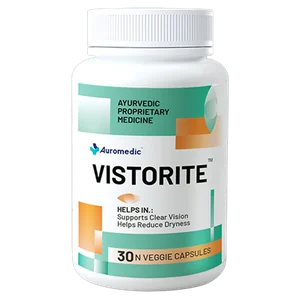
That is Vistorite's lane, not Visiorax's. Visiorax is the Ayurvedic Chakshushya formula; Vistorite is the Western AREDS2 formula. If you want measurable macular pigment optical density (MPOD) build-up, go to Vistorite; if you want the classical Chakshushya Rasayana, stay here.
Five short prompts. Answer honestly — your pattern of answers tells you whether Visiorax's classical Chakshushya Rasayana course fits your current eye-care goal.
You answered 0 Yes out of 5.
Recommended dosage: 1 capsule twice daily, 30 minutes after breakfast and dinner
If you take prescription medication, discuss this supplement with your doctor before starting it. Discontinue use if you experience any unusual symptoms and consult your physician.
Visiorax keeps its potency under simple Indian-household conditions when stored correctly. The bioactive carotenoids (saffron crocins) and polyphenols are mildly light-sensitive — keep the bottle closed when not in use.
4.7/5 average from 49 verified customers. Below: a representative selection.
I work in software, 10+ hours a day on three monitors. By Wednesday my eyes used to feel like sandpaper. After a Visiorax course my evenings feel noticeably less strained. I appreciated the actual references on the page — that is unusual for an Indian nutraceutical.
✓ Verified purchaseI had been taking a Western lutein-zeaxanthin formula for years. Wanted to try something from the Ayurvedic tradition my mother kept asking about. Visiorax is the first Ayurvedic eye formula I have seen with disclosed Sanskrit names AND dose standardisation — most are vague. Finished one course, will reassess after another.
✓ Verified purchasePay on delivery is the thing that got me to try. The bottle was sealed, the capsules look professional, and the ingredient panel is honest. End-of-day dryness from air conditioning at the office is meaningfully less by day 7.
✓ Verified purchaseI am a general physician, not an ophthalmologist. The saffron dose at 20 mg/day matching the Falsini trial protocol is what convinced me this is more than marketing. I recommend my screen-heavy patients have an honest ophthalmic exam first, then consider Visiorax as a nutritional adjunct — that is the right framing for any Rasayana.
✓ Verified purchaseReading the page took me 20 minutes — actual content, not the usual nutra-marketing fluff. Ordered, courier arrived in 2 days, paid the courier. The Ayurvedic-tradition framing was specifically what I wanted versus the Western supplement formulas.
✓ Verified purchaseEngineering manager, screen all day. By day 6 of Visiorax my evening reading on the Kindle is meaningfully more comfortable. Not a transformation but a real change — and I appreciate the catalogue's honesty that this is a nutritional support, not a treatment.
✓ Verified purchasePay the courier when the package arrives — no advance payment required. Pan-India shipping from our New Delhi facility.
Just your name and 10-digit mobile. We prepend +91 automatically.
Within 24 working hours. You confirm delivery address and quantity — no advance payment.
Courier arrives in 2–7 working days. You pay the exact amount in cash when the package reaches your address.
Visiorax is distributed exclusively through this nutritionist-reviewed catalogue. Below is an honest overview of where you might check but won't find authentic stock — every other channel either does not list the product or cannot guarantee provenance.
Apollo's retail focus is prescription medicines and major OTC brands. The Ayurvedic Chakshushya category and Visiorax specifically are not in Apollo's catalogue. Apollo does not currently stock Visiorax.
1mg's catalogue is brand-marketplace driven. Visiorax distributes via direct-fulfilment from this nutritionist-reviewed catalogue rather than through marketplace seller arrangements — keeping the supply chain auditable end-to-end.
Amazon's Ayurvedic listings rely on third-party seller arrangements where authenticity cannot be guaranteed. Any listing claiming to be Visiorax on Amazon India cannot be authenticated by us — counterfeit Chakshushya formulations are a documented problem on Indian marketplaces.
Reliance-owned Netmeds is structured around prescription refill subscriptions; seasonal Ayurvedic Rasayana courses don't fit that fulfilment model. Visiorax is not currently in Netmeds' catalogue.
Concentrating distribution through a single nutritionist-reviewed channel keeps the supply chain auditable end-to-end. It prevents the counterfeit-Visiorax problem that affects many popular Indian Ayurvedic formulations once they appear on third-party marketplaces with anonymous sellers — and it lets us guarantee that what you pay the courier for is the same sealed pack we dispatched from our facility.
Visiorax is included in the Newlife Hospital Pharmacy catalogue after a label, ingredient and suitability review. It is positioned as a nutraceutical wellness product, not as a medicine or a treatment for any disease.
Not a medicine. Not intended to diagnose, treat, cure or prevent disease. Consult a qualified healthcare professional if pregnant, breastfeeding, taking medication or managing a medical condition. Individual results vary.
Both are eye-nutrition capsules but they sit in entirely different traditions. Vistorite is the Western AREDS2-derived formula — lutein, zeaxanthin, bilberry, astaxanthin, beta-carotene, zinc — designed around macular-pigment-optical-density and blue-light filtration. Visiorax is the Ayurvedic Chakshushya Rasayana formula — Saffron, Amla, Curcumin, Yashtimadhu, Brahmi, Punarnava — designed around the classical Drishti tradition validated by modern Indian and Italian ophthalmology research. Pick the lane that matches what you actually want. They are not competitive products and there is no clinical rationale for combining them in the same course.
No. Visiorax is a nutritional Ayurvedic supplement formulated for daily eye-comfort support in screen-heavy adults. It is not a treatment for age-related macular degeneration, diabetic retinopathy, glaucoma, cataract, or any other diagnosed eye condition — those require an ophthalmologist and prescription-level intervention. Visiorax can be considered as a nutritional adjunct alongside ophthalmologist care, never instead of it.
Visiorax is a nutritional Rasayana, not a fast-acting drug. The classical Ayurvedic understanding and modern reviewed Rasayana literature both describe these formulations as building effect over a multi-week consumption arc. Most users describe perceptible end-of-day eye-comfort change between days 5 and 10. Visiorax is not designed to deliver instant symptom relief and any product claiming to 'restore vision in 5 minutes' should be treated with extreme scepticism.
Before combining any supplement with prescription medication, speak to your treating doctor. Specifically: if you are on anticoagulants or antiplatelets (warfarin, clopidogrel, apixaban), the curcumin in Visiorax can have additive effects — your doctor must know. If you have active liver disease, Yashtimadhu glycyrrhizin requires medical supervision. If you are pregnant or breastfeeding, do not take Visiorax — saffron above culinary doses is contraindicated. For all other adult users without these conditions, Visiorax is designed to sit compatibly alongside routine multivitamins and most prescribed medications, but the conservative answer is always: ask your doctor first.
No. Visiorax is deliberately distributed through this single nutritionist-reviewed catalogue rather than general pharmacy chains or third-party marketplaces. We do this for two reasons: it keeps the supply chain auditable end-to-end, and it prevents the counterfeit-Visiorax problem that affects many popular Indian nutraceuticals once they appear on marketplaces with anonymous third-party sellers. Any listing claiming to be Visiorax outside this catalogue cannot be authenticated by us. To order, use the pay-on-delivery form on this page — no advance payment is required and the courier delivers pan-India.
The 20-capsule / 10-day format matches classical Ayurvedic Rasayana cycling — short courses with washout periods rather than uninterrupted long-term consumption. Modern reviewed Rasayana literature generally supports this cycling approach for adaptogenic and antioxidant-active herbal stacks. After a 10-day Visiorax course you can reassess at your own subjective baseline, take a 7–14 day washout, and consider a second course if your visual-comfort pattern indicates it is useful.
Yes, completely. Visiorax is a nutritional support layer, not a substitute for screen-distance discipline (the 20-20-20 rule: every 20 minutes, look at something 20 feet away for 20 seconds), proper ambient lighting, blink-frequency awareness during long screen sessions, and an annual ophthalmic exam. The Ayurvedic Chakshushya tradition itself treats nutritional Rasayana as one column among many in eye care — not the entire framework.
Chakshushya is a Sanskrit Ayurvedic technical category meaning 'eye-supporting' — the classical Sushruta Samhita and Charaka Samhita texts grouped specific dietary and herbal substances under this heading, recognising centuries before modern ophthalmology that systemic nutritional status affects visual function. Rasayana means 'rejuvenation' — a Sanskrit category of preparations that support tissue regeneration and resilience over time. Visiorax is a Chakshushya Rasayana — a nutritional eye-support preparation in the classical Ayurvedic sense, formulated with modern dose standardisation and disclosed Latin scientific names so users see exactly what they are taking.
Visiorax is a dietary supplement classified as a nutraceutical or food-for-special-dietary-use under applicable Indian nutraceutical regulations. It is not intended to diagnose, treat, cure or prevent any disease. Results vary by individual. Discontinue use and consult your doctor if any adverse symptom occurs. Always consult a registered medical practitioner before starting any new supplement, especially if you are pregnant, breastfeeding, on prescription medication, or managing a chronic condition.
Fill in your details — we will call to confirm the order, then dispatch.
Your order details have been received. Our team will call you within a few hours to confirm.