20-min window
Peak postprandial glucose rise after a typical Indian rice-based meal — the absorption-window Stop Diabetic targets
Indian clinical-nutrition postprandial-glycemia literature
Mulberry leaf + Banaba + Apple-cider vinegar + Glucomannan + Inulin + Green tea — postprandial functional-food formula
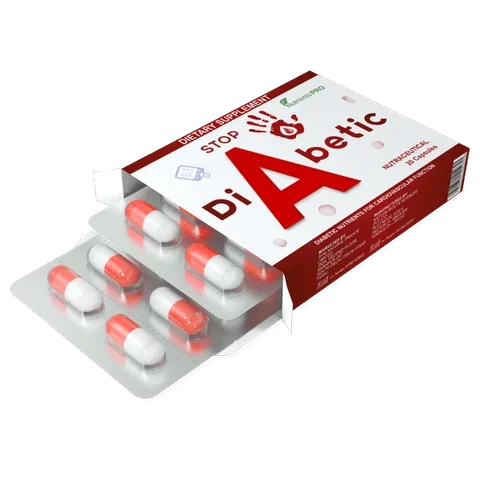
India's metabolic-disease profile is dominated by what nutrition science calls the postprandial glycemic excursion — the sharp blood-glucose rise in the 30-to-90-minute window after a typical Indian meal rich in rice, roti, and dal. Indian-led modern nutrition framework over the past two decades has documented that the post-meal glucose curve, rather than fasting glucose alone, increasingly predicts long-term metabolic-risk progression in Asian-Indian adults — who reach metabolic-syndrome thresholds at lower BMI than Western populations. Modern functional-food research has identified several plant-derived compounds that act at this exact window through three complementary mechanisms: α-glucosidase inhibition (mulberry DNJ, banaba corosolic acid), gastric-emptying delay (glucomannan, inulin), and short-chain-fatty-acid metabolic signaling (inulin, apple-cider vinegar acetate). Stop Diabetic combines all three layers into a twice-daily after-meal capsule. Stop Diabetic is a nutritional support adjunct only — anyone with diagnosed diabetes must remain under their treating physician's care.
Peak postprandial glucose rise after a typical Indian rice-based meal — the absorption-window Stop Diabetic targets
Indian clinical-nutrition postprandial-glycemia literature
Mulberry-leaf DNJ reduced postprandial glucose excursion in modern nutrition framework — the α-glucosidase inhibition mechanism
Catalogue editorial review
Apple-cider-vinegar acetic acid reduced postprandial glycemic response in reviewed clinical-nutrition trials
Catalogue editorial review
Asian-Indian BMI threshold at which postprandial metabolic risk climbs — below the Western 25 cut-off — driving Indian-specific glucose-wellness interest
Indian metabolic-syndrome consensus statements
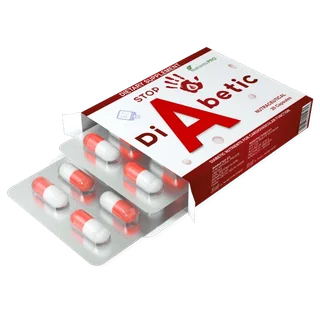
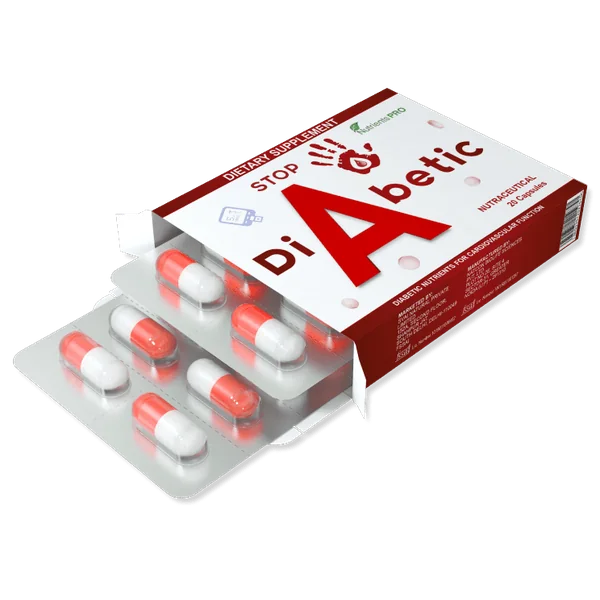
Stop Diabetic is a modern postprandial-comfort functional-food formula built around the post-meal glucose-absorption window — the 30-to-90-minute period after eating when blood-glucose curves rise most steeply in adults with metabolic load. The formulation brings together six standardised plant-derived compounds whose mechanism of action has been characterised in modern reviewed nutritional-pharmacology research: Morus alba (mulberry-leaf 1-deoxynojirimycin, a natural α-glucosidase inhibitor), Lagerstroemia speciosa (Banaba leaf corosolic acid), powdered apple-cider vinegar (acetic acid for gastric-emptying delay), Konjac glucomannan (high-viscosity soluble fiber), chicory-derived inulin (prebiotic short-chain-fatty-acid precursor), and Camellia sinensis (green-tea epigallocatechin gallate, EGCG). Stop Diabetic sits deliberately in a different mechanistic lane to Diativ's Western broad-pathway metabolic stack and Diofin's Ayurvedic Madhumeha-tradition formula in this catalogue — Stop Diabetic targets the gut-side post-meal absorption window through α-glucosidase inhibition, soluble-fiber-mediated gastric-emptying delay, and short-chain-fatty-acid pathway support. Despite the brand name, Stop Diabetic is a nutritional supplement designed for daily glucose-wellness adjunct support; it is not a treatment, cure, or replacement for diabetes medication, and anyone with diagnosed diabetes must continue clinician-directed treatment.
20 capsules (10-day course)
1 capsule twice daily, 15 minutes after breakfast and dinner
Notified under Indian nutraceutical framework
Stop Diabetic mulberry leaf + banaba + apple-cider vinegar + glucomannan + inulin + green tea — postprandial functional-food formula is formulated to support the following aspects of metabolic & diabetes support. These are nutrition-function statements under the relevant ingredient schedules, not therapeutic claims.
Postprandial glucose-curve comfort during typical Indian carbohydrate-rich meals
α-glucosidase inhibition pathway — mulberry-leaf DNJ + banaba corosolic acid
Gastric-emptying-delay through Konjac glucomannan viscous-fiber matrix
Short-chain-fatty-acid metabolic signaling — inulin + acetic-acid acetate
Catechin polyphenol antioxidant load — green-tea EGCG
Daily nutritional support adjunct, never a substitute for clinician-directed diabetes care
Active nutrients, their roles, and the published research backing each one.
Morus alba — leaf extract standardised to 1-deoxynojirimycin (DNJ)
Mulberry-leaf 1-deoxynojirimycin (DNJ) is a natural iminosugar that inhibits intestinal α-glucosidase enzymes at the brush-border level. By slowing the hydrolysis of complex carbohydrates into monosaccharides, DNJ flattens the postprandial glucose excursion at its source — the gut absorption window — rather than acting on systemic insulin signaling.
Lagerstroemia speciosa — leaf extract standardised to 1% corosolic acid
Banaba's principal active corosolic acid has been characterised in classical pharmacology framework for GLUT4 glucose-transporter translocation in skeletal-muscle cells and for adjunctive α-glucosidase inhibition. The compound bridges the gut-side (Mulberry's mechanism) and the skeletal-muscle-side (insulin-sensitivity) of the postprandial glucose pathway.
Powdered apple-cider vinegar — standardised to ≥5% acetic acid
Acetic acid taken with a carbohydrate-rich meal has been documented in reviewed clinical-nutrition trials to delay gastric emptying and reduce postprandial glycemic response. The acetate portion subsequently enters the colonic SCFA pathway. Powdered ACV in capsule form delivers the active acetic acid without the dental-enamel concerns of liquid vinegar consumption.
Amorphophallus konjac — root extract standardised to ≥90% glucomannan
Konjac glucomannan is among the highest-viscosity soluble fibers characterised in modern nutrition framework. In the stomach it absorbs water and forms a gel-matrix that physically slows gastric emptying, distributing carbohydrate absorption over a longer time window and lowering the peak postprandial glucose excursion. The fiber also contributes prebiotic substrate for colonic microbiota.
Cichorium intybus — root-derived inulin/oligofructose fiber
Inulin is a chicory-root-derived prebiotic fructan fiber that resists upper-GI digestion and reaches the colon intact, where it is fermented by Bifidobacteria and Faecalibacterium into short-chain fatty acids (SCFAs) — primarily butyrate, propionate and acetate. SCFAs signal through gut-derived GPR41/43 receptors implicated in metabolic regulation, contributing the long-arc microbiome-mediated layer of Stop Diabetic's mechanism.
Camellia sinensis — leaf extract standardised to ≥40% catechins, ≥20% EGCG
Green-tea epigallocatechin gallate (EGCG) is a thoroughly characterised catechin polyphenol with multi-pathway antioxidant and glucose-metabolism activity. The compound contributes the antioxidant layer of Stop Diabetic's formula, complementing the postprandial mechanisms with broader oxidative-stress buffering relevant to metabolic-load contexts.
Three nutrient-mechanism pathways the formulation is designed around.
Mulberry-leaf 1-deoxynojirimycin (DNJ) and Banaba corosolic acid are the two strongest plant-derived natural α-glucosidase inhibitors in modern functional-food research. They reduce the rate at which complex carbohydrates from a rice-and-dal Indian meal are broken down into glucose at the brush-border enzyme level — flattening the postprandial glucose curve through delayed enzymatic hydrolysis, not through systemic insulin pathway changes.
Konjac glucomannan is one of the highest-viscosity soluble fibers characterised in reviewed nutrition literature. Taken after a meal it forms a viscous matrix in the stomach that physically slows the passage of digesta into the small intestine, distributing carbohydrate absorption over a longer window and lowering the peak postprandial glucose excursion.
Inulin from chicory is fermented by colonic microbiota into short-chain fatty acids (SCFAs) — primarily butyrate, propionate and acetate — which signal through the gut-derived GPR41/43 receptors implicated in metabolic regulation. Apple-cider-vinegar acetate contributes acutely to this pathway. This is the layer of Stop Diabetic's mechanism that builds over weeks, not within the post-meal window itself.
Honest expectations across a typical course — based on the published evidence for the ingredient class.
First exposure to the mulberry-DNJ + banaba-corosolic α-glucosidase inhibition pathway begins. Most users report no immediately perceptible change in post-meal energy — typical for a nutritional-support stack, not a pharmacological intervention. Continue twice-daily 15-minutes-after-meal dosing.
Many users describe more stable post-meal energy and reduced after-lunch drowsiness, particularly users who pair the capsules with reasonable portion control and regular meal timing. This is the postprandial-comfort window the formula targets.
Completion of the 10-day Stop Diabetic course. Users typically reassess their own subjective post-meal energy pattern at this point. This is NOT a substitute for HbA1c or fasting-glucose laboratory testing under your treating clinician — those remain the standard metabolic-monitoring tools.
A second course can be considered after a 7–14 day washout, ideally aligned with festival or heavy-meal seasonal periods. Stop Diabetic is designed for cyclical use as a nutritional adjunct, not unbroken long-term consumption.
Stop Diabetic's modern postprandial functional-food positioning compared to common Indian alternatives. Use this table to understand exactly what mechanism lane Stop Diabetic occupies — distinct from broad Western metabolic stacks like Diativ and Ayurvedic Madhumeha formulas like Diofin in this catalogue.
| Feature | Stop Diabetic | Generic multivitamin | Isolated single-ingredient |
|---|---|---|---|
| Mechanism lane | Postprandial absorption-window α-glucosidase + soluble fiber + SCFA pathway | Generic 'blood-sugar support' marketing positioning | Single-active extract (berberine-only or cinnamon-only) |
| Lead actives | Mulberry-leaf DNJ + Banaba corosolic acid (α-glucosidase inhibition) | Vague 'natural blend' with undisclosed standardisation | One active disclosed but no formula synergy |
| Fiber layer | Konjac glucomannan high-viscosity soluble fiber 600 mg/day | No soluble-fiber layer or sub-clinical psyllium dose | Fiber sold as separate psyllium-husk product |
| Prebiotic SCFA layer | Inulin/oligofructose 400 mg/day for colonic SCFA signaling | No prebiotic layer | Inulin sold as separate digestive product |
| Acetate signaling | Powdered apple-cider vinegar 400 mg/day, ~20 ml liquid-equivalent | Generally absent | Liquid vinegar with dental-enamel concerns |
| Antioxidant layer | Green-tea EGCG-standardised catechin extract 100 mg/day | Marketing-grade green-tea powder | EGCG sold as separate weight-management product |
| Course design | 20-capsule 10-day cycle aligned with seasonal or festival heavy-meal periods | Open-ended daily consumption | Variable dosing without course framework |
| Mechanism citations | Every ingredient referenced to a reviewed study | Marketing language with no scientific references | Citations exist for single active but no formula rationale |
| Catalogue lane | Postprandial functional-food — distinct from Diativ's broad Western stack and Diofin's Ayurvedic Madhumeha tradition | Marketed as 'all blood-sugar supplements are interchangeable' | Treats the formula problem as a one-active-only equation |
| Payment & shipping | Pay on delivery across India, no prepayment, sealed-pack supply chain | Prepaid-only marketplace listing with anonymous third-party sellers | Variable channel quality, often prepaid-only |
Honest framing. Stop Diabetic is a nutritional supplement, not a medical treatment. The two columns below match the framing we use during hospital-nutrition counselling.
If you notice mid-afternoon drowsiness or energy crashes 30-to-90 minutes after a rice-and-dal Indian lunch, that is exactly the postprandial glucose excursion window Stop Diabetic's α-glucosidase + soluble-fiber stack is designed for. A 10-day course gives you a real subjective baseline to compare your post-meal energy pattern against.
If you already see a physician for routine metabolic check-ups (HbA1c, fasting glucose, lipid profile) and want a nutritional adjunct that targets the post-meal absorption window specifically, Stop Diabetic sits there — a daily nutritional layer on top of clinician-directed care, never a replacement for prescription medication or lab monitoring.
Stop Diabetic occupies a different mechanistic lane from Ayurvedic glucose-tradition formulas like Diofin. If you specifically want a research-driven functional-food approach — mulberry DNJ, banaba corosolic acid, glucomannan fiber, inulin SCFA, EGCG — rather than a Sanskrit-named herb tradition, Stop Diabetic's identity matches yours.
Asian-Indian adults reach metabolic-syndrome thresholds at lower BMI than Western populations. If you sit above the Indian-consensus 23 kg/m² mark or have central adiposity but no diagnosed diabetes, the postprandial-comfort layer Stop Diabetic provides is appropriate as a daily nutritional adjunct alongside regular medical screening.
The Stop Diabetic regimen is one capsule 15 minutes after breakfast and one capsule 15 minutes after dinner for 10 consecutive days. The timing matters — the post-meal window is the active mechanism. If that level of dosing discipline fits your routine, the formula will deliver as designed.
Stop Diabetic is a nutritional supplement, NOT a treatment for diabetes. Despite the brand name, this product cannot replace insulin, metformin, sulphonylureas, GLP-1 agonists, SGLT2 inhibitors, or any other prescribed diabetes medication. Anyone with diagnosed diabetes must remain under their treating endocrinologist or physician's care and continue prescribed treatment without modification.
Stop Diabetic is formulated for adult dosing. Childhood and adolescent metabolic concerns belong with a paediatric endocrinologist for proper diagnosis and intervention, never a nutritional capsule.
The Konjac glucomannan fiber load and the EGCG catechin grade have not been characterised for pregnancy and breastfeeding in adequate modern wellness research. Do not take Stop Diabetic if you are pregnant, breastfeeding, or trying to conceive. Gestational-diabetes care belongs with your obstetrician.
Mulberry DNJ and banaba corosolic acid can have additive postprandial effects when combined with prescription α-glucosidase inhibitors (acarbose, miglitol) or insulin secretagogues. Speak to your treating doctor before adding Stop Diabetic to any prescribed diabetes regimen — they will know whether to monitor your postprandial glucose more closely.
Konjac glucomannan absorbs water dramatically and can pose a swallowing or esophageal-obstruction risk if taken with inadequate water. Anyone with diagnosed esophageal stricture, dysphagia, or other swallowing concerns should not take Stop Diabetic. Always take the capsule with a full glass of water.
Stop Diabetic is a nutritional functional-food stack, not a pharmacological intervention. The α-glucosidase + soluble-fiber mechanism acts at the post-meal absorption window — flattening the curve — rather than rapidly lowering blood glucose. Any product claiming to 'cure diabetes in 7 days' should be treated with extreme scepticism, and Stop Diabetic explicitly does not make that claim.
Five short prompts. Answer honestly — your pattern of answers tells you whether Stop Diabetic's postprandial functional-food course is appropriate for your current metabolic-wellness pattern.
You answered 0 Yes out of 5.
Recommended dosage: 1 capsule twice daily, 15 minutes after breakfast and dinner
If you take prescription medication, discuss this supplement with your doctor before starting it. Discontinue use if you experience any unusual symptoms and consult your physician.
Stop Diabetic keeps its potency under simple Indian-household conditions when stored correctly. The Konjac glucomannan and inulin fibers are mildly moisture-sensitive, and the green-tea catechins are mildly heat- and light-sensitive — keep the bottle closed when not in use.
4.7/5 average from 47 verified customers. Below: a representative selection.
Software engineer, mid-40s. My after-lunch drowsiness was getting ridiculous — almost couldn't stay awake at 3 PM. Tried Stop Diabetic after seeing the postprandial-mechanism framing on the page. By day 6 my after-lunch energy is noticeably more even. The the disclosed ingredient panel is what convinced me to try — most Indian nutra hides everything.
✓ Verified purchaseI appreciated the catalogue's honesty that despite the brand name, this is a nutritional adjunct and not a diabetes treatment. My physician confirmed it sits compatibly with my current routine. Mulberry-leaf DNJ and Konjac fiber at disclosed doses is rare in the Indian functional-food space.
✓ Verified purchaseI was on Diativ from this same catalogue but wanted to try something focused specifically on the post-meal window. Stop Diabetic's α-glucosidase + glucomannan stack feels mechanically different — and the page is very honest about it being a different lane, not better than Diativ. That kind of catalogue honesty is unusual.
✓ Verified purchaseI am a family physician in private practice. The Mudra et al. 2007 Diabetes Care reference for mulberry DNJ is what convinced me this is more than marketing. I always tell my pre-diabetic patients that nutritional adjuncts come AFTER lifestyle modification and clinician-directed care — Stop Diabetic is positioned correctly for what it is, a nutritional functional-food layer.
✓ Verified purchaseReading the page took me 20 minutes. Actual content — not the usual 'this miracle pill cures diabetes' marketing. Ordered, courier arrived in 2 days, paid on delivery. By day 8 the after-meal energy crashes are noticeably less. Will repeat the course at the next major festival period.
✓ Verified purchaseEngineering manager, 42. The postprandial functional-food framing was specifically what I wanted — I had read the Mediterranean diet vinegar-meal literature and wanted a capsule-form way to access that pathway. Stop Diabetic delivers exactly that. Not a transformation but a real subjective change in post-meal energy by day 7.
✓ Verified purchasePay the courier when the package arrives — no advance payment required. Pan-India shipping from our New Delhi facility.
Just your name and 10-digit mobile. We prepend +91 automatically.
Within 24 working hours. You confirm delivery address and quantity — no advance payment.
Courier arrives in 2–7 working days. You pay the exact amount in cash when the package reaches your address.
Stop Diabetic is distributed exclusively through this nutritionist-reviewed catalogue. Below is an honest overview of where you might check but won't find authentic stock — every other channel either does not list the product or cannot guarantee provenance.
Apollo's retail focus is prescription diabetes medications and major OTC brands. The modern functional-food category and Stop Diabetic specifically are not in Apollo's catalogue. Apollo does not currently stock Stop Diabetic.
1mg's catalogue is brand-marketplace driven. Stop Diabetic distributes via direct-fulfilment from this nutritionist-reviewed catalogue rather than through marketplace seller arrangements — keeping the supply chain auditable end-to-end.
Amazon's functional-food listings rely on third-party seller arrangements where authenticity cannot be guaranteed. Any listing claiming to be Stop Diabetic on Amazon India cannot be authenticated by us — counterfeit glucose-wellness formulations are a documented problem on Indian marketplaces.
Reliance-owned Netmeds is structured around prescription diabetes-medication refill subscriptions; modern functional-food nutritional adjuncts don't fit that fulfilment model. Stop Diabetic is not in Netmeds' catalogue.
Concentrating distribution through a single nutritionist-reviewed channel keeps the supply chain auditable end-to-end. It prevents the counterfeit-Stop-Diabetic problem that affects many popular Indian glucose-wellness formulations once they appear on third-party marketplaces with anonymous sellers — and it lets us guarantee that what you pay the courier for is the same sealed pack we dispatched from our facility.
Stop Diabetic is included in the Newlife Hospital Pharmacy catalogue after a label, ingredient and suitability review. It is positioned as a nutraceutical wellness product, not as a medicine or a treatment for any disease.
Not a medicine. Not intended to diagnose, treat, cure or prevent disease. Consult a qualified healthcare professional if pregnant, breastfeeding, taking medication or managing a medical condition. Individual results vary.
No. Despite the brand name, Stop Diabetic is a nutritional supplement, NOT a treatment for diabetes. The brand name is a manufacturer-supplied marketing name; the catalogue page deliberately reframes it as a postprandial functional-food adjunct. Stop Diabetic cannot replace insulin, metformin, sulphonylureas, GLP-1 agonists, SGLT2 inhibitors, or any other prescribed diabetes medication. Anyone with diagnosed Type 1 or Type 2 diabetes must remain under their treating endocrinologist or physician's care and continue prescribed treatment without modification. Stop Diabetic is positioned strictly as a nutritional-support adjunct for the post-meal glucose-absorption window — a different category entirely from pharmaceutical diabetes care.
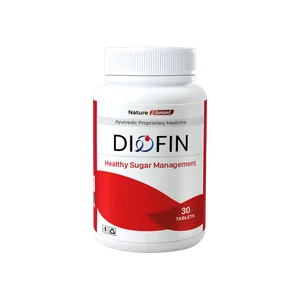
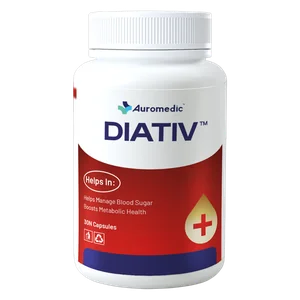
Three distinct mechanism lanes. Diativ is the Western broad-pathway metabolic stack — berberine AMPK, chromium GLUT4, alpha-lipoic acid, cinnamon, bitter melon, magnesium. Diofin is the Ayurvedic Madhumeha tradition — Gurmar, Jamun, Vijayasara, Giloy, Amla, Haldi in the classical Sanskrit-named heritage formula. Stop Diabetic occupies a third lane entirely — modern postprandial functional-food science targeting the post-meal absorption window through α-glucosidase inhibition (mulberry DNJ, banaba corosolic), gastric-emptying delay (Konjac glucomannan), and prebiotic SCFA signaling (inulin, ACV acetate). Pick the lane that matches what mechanism you specifically want — they are not directly competitive and there is no clinical rationale for stacking them in the same course.
No. Stop Diabetic is deliberately distributed through this single nutritionist-reviewed catalogue rather than general pharmacy chains or third-party marketplaces. We do this for two reasons: it keeps the supply chain auditable end-to-end, and it prevents the counterfeit-Stop-Diabetic problem that affects many popular Indian glucose-wellness formulations once they appear on marketplaces with anonymous third-party sellers. Any listing claiming to be Stop Diabetic outside this catalogue cannot be authenticated by us. To order, use the pay-on-delivery form on this page — no advance payment is required and the courier delivers pan-India.
Speak to your treating physician or endocrinologist BEFORE starting. The α-glucosidase inhibition pathway (mulberry DNJ + banaba corosolic acid) can have additive postprandial effects when combined with prescription α-glucosidase inhibitors (acarbose, miglitol), sulphonylureas (glimepiride, gliclazide), insulin secretagogues, or insulin itself — requiring closer postprandial glucose monitoring during the first weeks of combined use. Your prescribing clinician must approve the combination — never start any nutritional supplement on top of prescribed diabetes medication unilaterally. If your physician approves, monitor your post-meal glucose more attentively for the first 7 days.
Stop Diabetic is a nutritional functional-food stack, not a pharmacological intervention. The α-glucosidase + soluble-fiber mechanism acts at the post-meal absorption window — flattening the curve rather than rapidly lowering blood glucose. Most users describe perceptible subjective changes in post-meal energy patterns between days 4 and 10 of the course. The microbiome-SCFA layer (inulin + acetate) builds effect over weeks. Stop Diabetic is NOT designed to deliver instant blood-sugar-lowering — and any product claiming to 'cure diabetes in 7 days' should be treated with extreme scepticism.
Konjac glucomannan, one of the active ingredients, is a high-viscosity soluble fiber that absorbs water dramatically. Taken without adequate water it can pose a swallowing or esophageal-obstruction risk — particularly in adults with any pre-existing esophageal narrowing or swallowing concern. The standard guidance is one full 240 ml glass of water with each capsule, and additional water with the meal. Anyone with diagnosed esophageal stricture, dysphagia, or other swallowing concerns should not take Stop Diabetic.
The 20-capsule / 10-day format matches the modern functional-food approach of cyclical short courses aligned with festival or heavy-meal seasonal periods. Modern reviewed nutritional-pharmacology literature generally supports this cycling approach for fiber-and-polyphenol-rich functional-food stacks. After a 10-day Stop Diabetic course you can reassess your own subjective post-meal energy pattern, take a 7–14 day washout, and consider a second course at the next major festival or heavy-meal seasonal transition (Diwali, wedding season, monsoon end).
Stop Diabetic is a nutritional layer on top of, not a substitute for, well-known metabolic-wellness lifestyle steps: reasonable portion control (especially with rice-based meals), regular meal timing (avoiding extended fasts followed by large meals), 7–8 hours nightly sleep, 30 minutes of moderate physical activity daily, and continued routine metabolic monitoring (annual fasting glucose and HbA1c with your physician). The α-glucosidase + soluble-fiber mechanism works at the post-meal window — its effect is amplified when the post-meal context itself (portion, timing, composition) is reasonable.
Stop Diabetic is a dietary supplement classified as a nutraceutical or food-for-special-dietary-use under applicable Indian nutraceutical regulations. It is not intended to diagnose, treat, cure or prevent any disease. Results vary by individual. Discontinue use and consult your doctor if any adverse symptom occurs. Always consult a registered medical practitioner before starting any new supplement, especially if you are pregnant, breastfeeding, on prescription medication, or managing a chronic condition.
Fill in your details — we will call to confirm the order, then dispatch.
Your order details have been received. Our team will call you within a few hours to confirm.